Starting dialysis can be a life-changing moment. Most patients feel a mix of relief and anxiety — relief because treatment helps keep their kidneys functioning, and anxiety because the process is unfamiliar.
At Comprehensive Dialysis, we believe knowledge brings comfort. Understanding what happens inside a dialysis center helps patients walk in prepared, confident, and ready to focus on what truly matters — staying healthy and living fully.
This guide explains the entire dialysis process step-by-step, from check-in to post-treatment care, so you’ll know exactly what to expect at every stage.
🕐 Step 1: Check-In and Warm Welcome
When you arrive at the dialysis center, you’re greeted by the reception or patient care coordinator. They’ll confirm your:
- Name and appointment time
- Recent weight and any recent symptoms
- Medication or dietary changes since your last session
After check-in, you’ll be guided to your assigned treatment area — a comfortable chair or bed equipped with a dialysis machine and personal monitor.
Your dialysis nurse or technician will greet you, review your medical chart, and ensure all safety checks are complete before starting.
✅ Pro Tip: Arrive about 15–20 minutes early to allow time for weight measurement and a short chat with your care team.
💉 Step 2: Pre-Treatment Health Assessment
Before connecting to the dialysis machine, your nurse performs a pre-treatment assessment. This ensures your treatment is tailored to your health that day.
The assessment includes:
- Measuring blood pressure, temperature, and pulse
- Recording your pre-dialysis weight
- Examining your vascular access site (fistula, graft, or catheter)
- Asking about any unusual symptoms like swelling, cramps, or headaches
This careful review helps your team identify small issues before they become major — ensuring a safe and effective dialysis session.
⚙️ Step 3: Machine Preparation and Vascular Access Connection
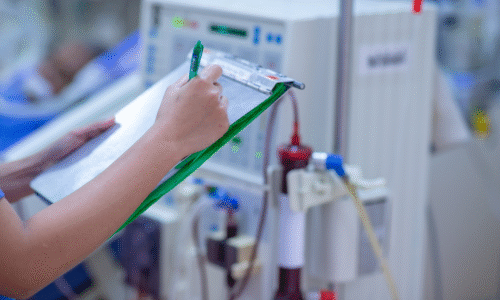
Once cleared, your care team prepares your dialysis machine. The machine’s dialyzer — often called an artificial kidney — filters toxins, waste, and extra fluid from your blood.
The nurse cleans your access site using sterile techniques, then connects the tubing to begin treatment. Your blood circulates through the dialyzer and returns clean, while the machine carefully monitors:
- Blood flow rate
- Fluid removal rate
- Pressure readings
- Dialysate (cleaning solution) composition
The system is designed with multiple safety alarms that automatically pause treatment if irregularities are detected.
🧘 Step 4: Relaxing During Dialysis Treatment
Hemodialysis sessions usually last three to four hours, depending on your doctor’s prescription. During this time, you can:
- Read or listen to music
- Watch television
- Chat with other patients
- Take a short nap
At Comprehensive Dialysis, we focus on making each session comfortable. You’ll have reclining chairs, warm blankets, and staff always nearby.
The nurses frequently check your vitals, blood pressure, and machine readings to make sure everything runs smoothly.
💬 Tip: If you feel dizzy, cold, or uncomfortable, always inform the nurse immediately — adjustments can be made instantly.
🩹 Step 5: Disconnecting and Post-Treatment Care
When your prescribed dialysis time is complete, the machine gradually slows down and stops. The nurse will disconnect your lines carefully, clean your access site, and cover it with sterile dressing.
You’ll be re-weighed to determine how much fluid was removed, and your vital signs will be checked again.
After treatment, many patients feel slightly tired — this is normal as your body adjusts to the fluid and toxin balance. You’ll rest for a few minutes before heading home.
✅ Self-Care Tip: Drink fluids only as advised by your renal nutritionist. Over-hydration between sessions can make future treatments harder.
🥗 Step 6: After-Care and Continuous Health Support
Dialysis isn’t a one-time procedure — it’s an ongoing part of your kidney care plan. Between sessions, your overall well-being depends on following medical guidance.
At Comprehensive Dialysis, we combine treatment with continuous care, including:
- Renal Nutrition Counseling: Expert diet plans to manage potassium, sodium, and protein levels.
- Vascular Access Management: Regular monitoring to prevent clotting and infection.
- Social Work & Patient Support Services: Emotional, financial, and lifestyle guidance for patients and families.
Our goal is to make sure every patient not only survives dialysis — but thrives with confidence and dignity.
⚖️ Step 7: Safety, Cleanliness & Infection Control
Safety is our top priority. Dialysis centers follow strict infection control standards recommended by the CDC and CMS.
We maintain:
- Sterile equipment for each session
- Routine disinfection between patients
- Strict hand hygiene and PPE compliance
- Continuous monitoring of water purity
Every detail — from machine calibration to chair cleaning — ensures that your treatment environment is as safe as possible.
🌿 Step 8: Emotional Wellness & Community Support
Dialysis can affect your physical and emotional health. Feeling tired or frustrated is normal, but you’re never alone.
At Comprehensive Dialysis, our social workers and counselors help patients adapt through:
- One-on-one counseling sessions
- Support group meetings
- Educational workshops for families
- Lifestyle coaching for home management
We believe dialysis is not just about treatment — it’s about empowerment, education, and emotional resilience.
🧭 Step 9: Planning for the Future
Over time, your care plan may evolve. Some patients explore home dialysis options like Peritoneal Dialysis for more flexibility. Others focus on improving health markers to become candidates for kidney transplant.
Your nephrologist and care team will guide you through every stage, ensuring your choices fit your lifestyle, comfort, and long-term health goals.
💬 Frequently Asked Questions (FAQ)
- How long does each dialysis session take?
Most in-center hemodialysis treatments last between 3 to 4 hours, three times a week. - Can I eat before dialysis?
A light meal or snack before treatment is fine, but avoid heavy foods. Always follow your dietitian’s renal meal plan. - Is dialysis painful?
No, dialysis isn’t painful. You may feel a small pinch when needles are inserted, but the rest of the treatment is usually comfortable. - What should I bring to my dialysis session?
Bring reading material, headphones, a light blanket, and any prescribed medications approved by your doctor. - How do I care for my vascular access site?
Keep the area clean and dry, avoid tight clothing, and never sleep on the arm with your access. Report any redness, pain, or swelling immediately.
🧡 Conclusion
Dialysis may sound intimidating at first, but once you understand the process, it becomes a predictable and manageable routine. Each step — from check-in to post-care — is handled with precision and compassion by your medical team.
At Comprehensive Dialysis, we’re committed to providing safe, comfortable, and personalized in-center hemodialysis that fits your lifestyle and health goals.
Because to us, dialysis isn’t just treatment — it’s a partnership for better living.